
Read Chambers Property Tax Records
In Chambers County, the Revenue Commissioner's assessment card links to a tax account and its payment trail. The card breaks out land, buildings, improvements, appraised value, exemptions, annual tax, and prior payments. The tax portal shows what was billed and paid. Neither figure is a current sale price.
Alabama builds assessed value from appraised value times a class ratio. Millage then applies to that assessed figure. Exemptions can lower the result. Confirm the class and exemption shown for the parcel rather than assuming a ratio.
| Field | What It Shows | Where |
|---|---|---|
| Land and building values | Separate appraisal components | CAMA card |
| Appraised and assessed values | Full appraisal input and taxable class share | CAMA and Revenue |
| Exemption status | Whether qualifying relief is applied | Assessment record |
| Tax and payment history | Annual amount, date, and status | CAMA and Ingenuity |
| District and city | Jurisdiction clues tied to the account | CAMA card |
A 2025 assessment card for a Lanett parcel lists separate land and building totals, an appraised total, annual tax, and two years of payment entries. No Last Sale field appears. Use the recorded deed or RT-1 validation trail instead.
Chambers October Roll Timing
The Revenue Commissioner keeps tax rolls one year in arrears, and title on October 1 of the prior year controls the next roll. Taxes come due October 1 and become delinquent January 1. A mailed notice is only a courtesy. The owner owes it either way.
After buying, record the deed in Probate. Then file an assessment return with the Property Assessment Division in LaFayette, reporting any mailing-address change and exemption claim. County taxes are not prorated. Buyers should check the full unpaid year.
Note: A current deed and a tax-bill name can differ during the Chambers roll update cycle.
Chambers CAMA Value Fields
The CAMA Basic Search accepts PIN, segmented parcel, owner, physical address, acreage range, total-value range, district, and subdivision. Try one direct key first. Then open the card and keep its year.
| Search field | Form | Tax use |
|---|---|---|
| PIN / Parcel | Text or segments | Match an exact assessment |
| Owner | Name text | Find cards under a roll name |
| PhyAddr | Number and street | Locate the situs |
| TL Value | Minimum and maximum | Narrow by displayed tax value |
| District / Subdivsn | Dropdown | Limit the result area |
Value ranges are assessment data only. They are not an appraisal opinion, so use the full card to separate land, building, miscellaneous improvement, and appraised totals.
Look Up a Chambers Tax Bill
The official Revenue site links the Ingenuity property-tax portal. Start with a CAMA parcel, PIN, or account so similar owner names do not create a false match. Compare tax year, owner, description, amount, and payment status.
- Find the parcel in CAMA and copy its account identifiers.
- Open the Revenue-linked tax portal and select the matching year and land.
- Compare amounts and payment dates with the card history.
- Check the assessment record for class and exemption status.
- For delinquency, compare the current account, auction notice, and any later Probate instrument.
- Assessed value
- The class-based share used in the tax calculation.
- Mill
- One-thousandth, or 0.001, used in the levy.
- Homestead exemption
- Qualifying owner-occupied relief claimed through Revenue.
- Tax lien
- A claim for unpaid tax that requires release or satisfaction research.
Chambers Homestead Filing
A regular homestead applicant in Chambers must own and occupy the home on October 1. A qualifying Class III home is assessed at 10 percent rather than the otherwise applicable 20 percent Class II ratio. File before December 31 after purchase. Refile when the deed or occupancy changes.
Current-use classification follows a different path: Chambers describes at least five acres in qualifying farm, pasture, timber, agriculture, livestock, or wood production. Apply by December 31 for the next year. A new owner must apply or fair-market treatment applies.
Chambers Improvements and Returns
Revenue guidance says improvements completed by October 1 should be reported by December 31. That includes additions, pools, extensive remodeling, fireplaces, extra baths, patios, decks, carports, and garages. Reroofing, paint, and minor repair are treated differently.
The RT-1 form is separate from the deed index. This Sales Validation form asks for grantor, grantee, property and mailing addresses, sale date, purchase price or value evidence, signature, and role. The public card has no Last Sale field. The RT-1 can bridge that gap.
Chambers Delinquency Records
Revenue's news page announced a 2024 Tax Sale Auction held April 28, 2025. Links went to delinquent real and business personal property lists. That is an event notice, not a schedule. Probate also offers tax-sale docket and deed options by year.
A delinquent row proves nothing by itself. Check payment status and the tax-sale docket. Check redemption records, any recorded tax deed, and the current card. County guidance lists 1 percent monthly interest plus charges after delinquency.
Chambers Tax Jurisdiction Codes
State Revenue material distinguishes incorporated and unincorporated Chambers locations. LaFayette, Valley, Lanett, Waverly, and Five Points share code 7009 in the cited table, while unincorporated Chambers uses 7109. The Lanett police-jurisdiction code ended December 31, 2023. Unincorporated treatment applies from January 1, 2024.
These codes are clues, not a tax estimate, so confirm the current rate table, parcel district, city field, exemptions, and levy for the tax year. A postal city or ZIP never establishes municipal limits.
View Chambers Tax Portals
The Revenue-linked online tax system shows the county payment and account route.
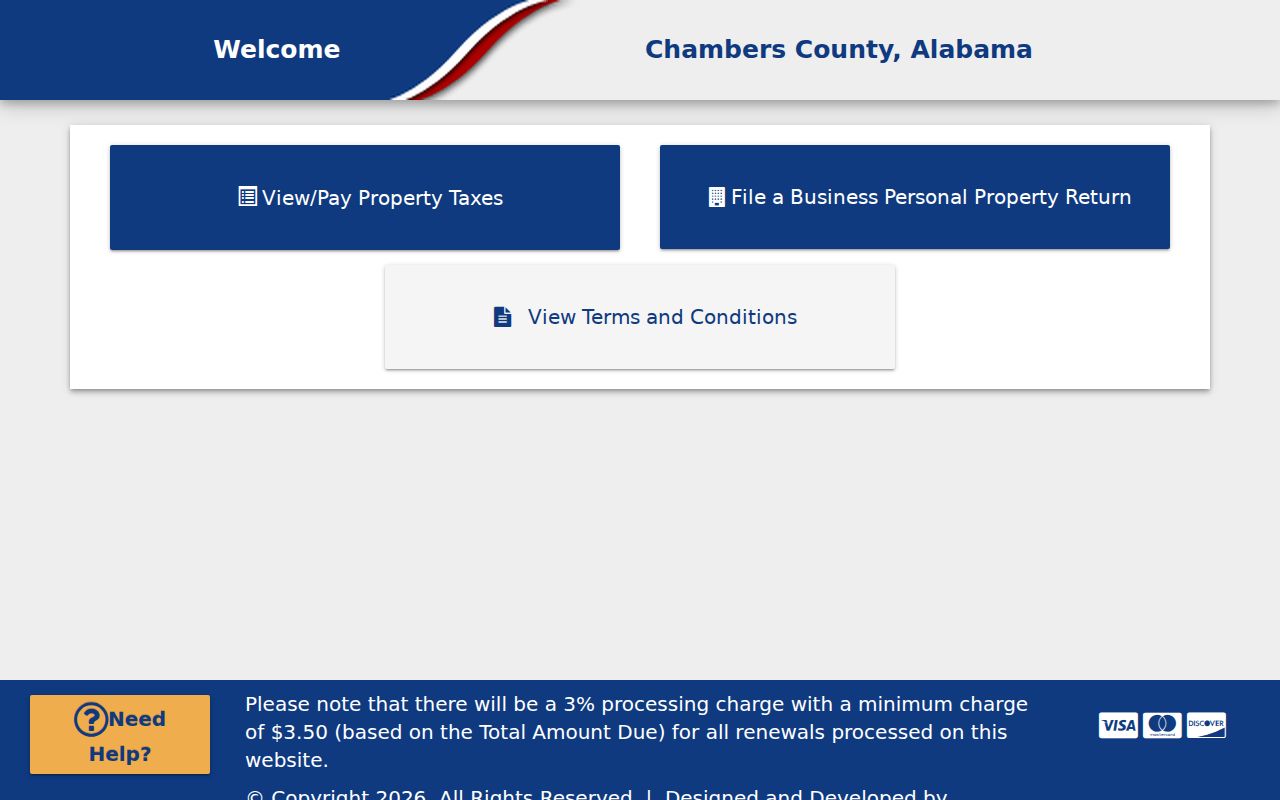
Identify the correct official-linked service first. Alabama's property-tax assessment page explains the state formula behind the county figures in Chambers.
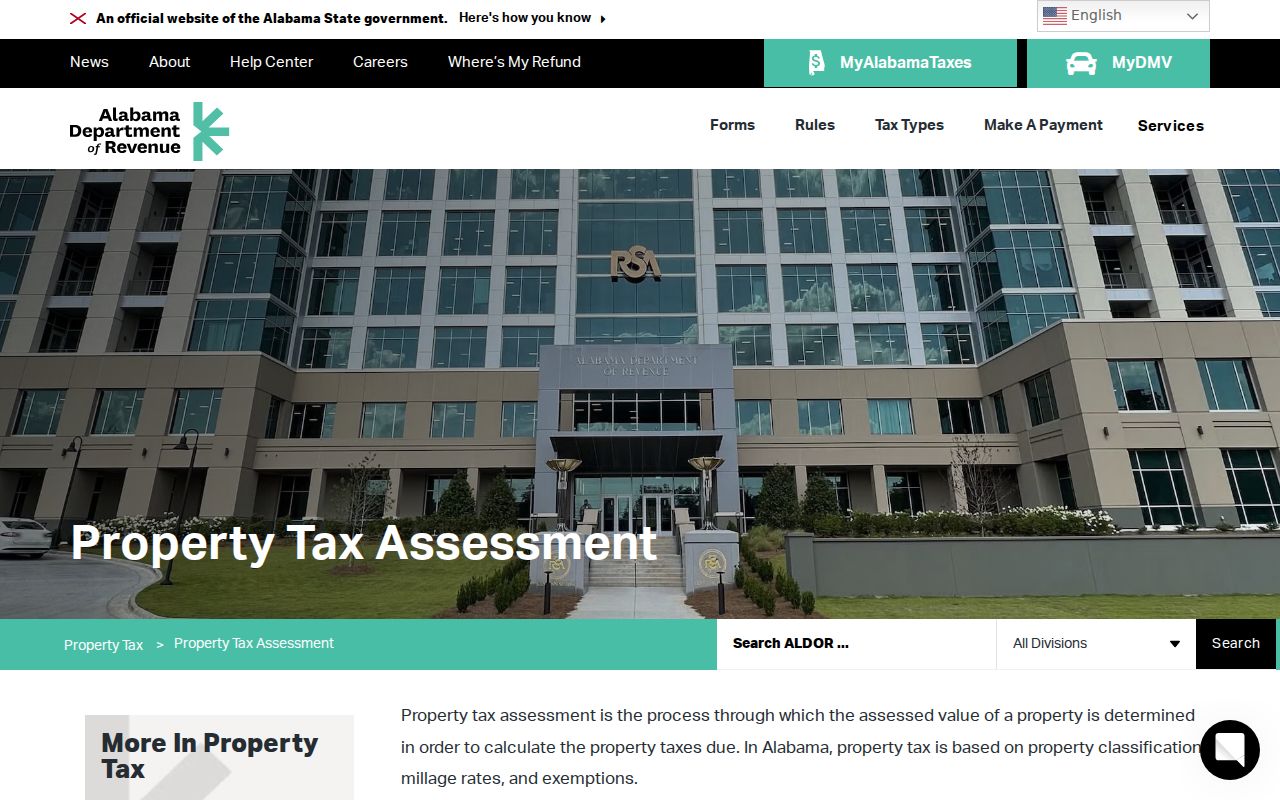
Use that formula with the parcel's class and exemption.
Contest a Chambers Assessment
Alabama law gives Chambers County owners two clocks to watch. A written protest of a preliminary valuation goes to the County Board of Equalization. It is generally due within 30 days after the written valuation notice, under Ala. Code §§40-3-20, 40-3-24, and 40-3-25. That route is separate from the 60-day appeal window that applies after a final assessment. Keep the two deadlines straight.
Evidence matters more than argument. Bring the parcel card, the notice, photographs, and measurements. Add any credible comparable or appraisal evidence that speaks to the disputed value. Start with the Chambers appraisal staff, who can correct objective card errors on the spot. Assessment, collection, and mapping run on separate county phone lines. Say which field is wrong when you call.
Appeal window. A preliminary valuation protest is generally due within 30 days of notice. Confirm the notice date and filing route immediately.
The state value-protest instructions show the formal Board of Equalization route.
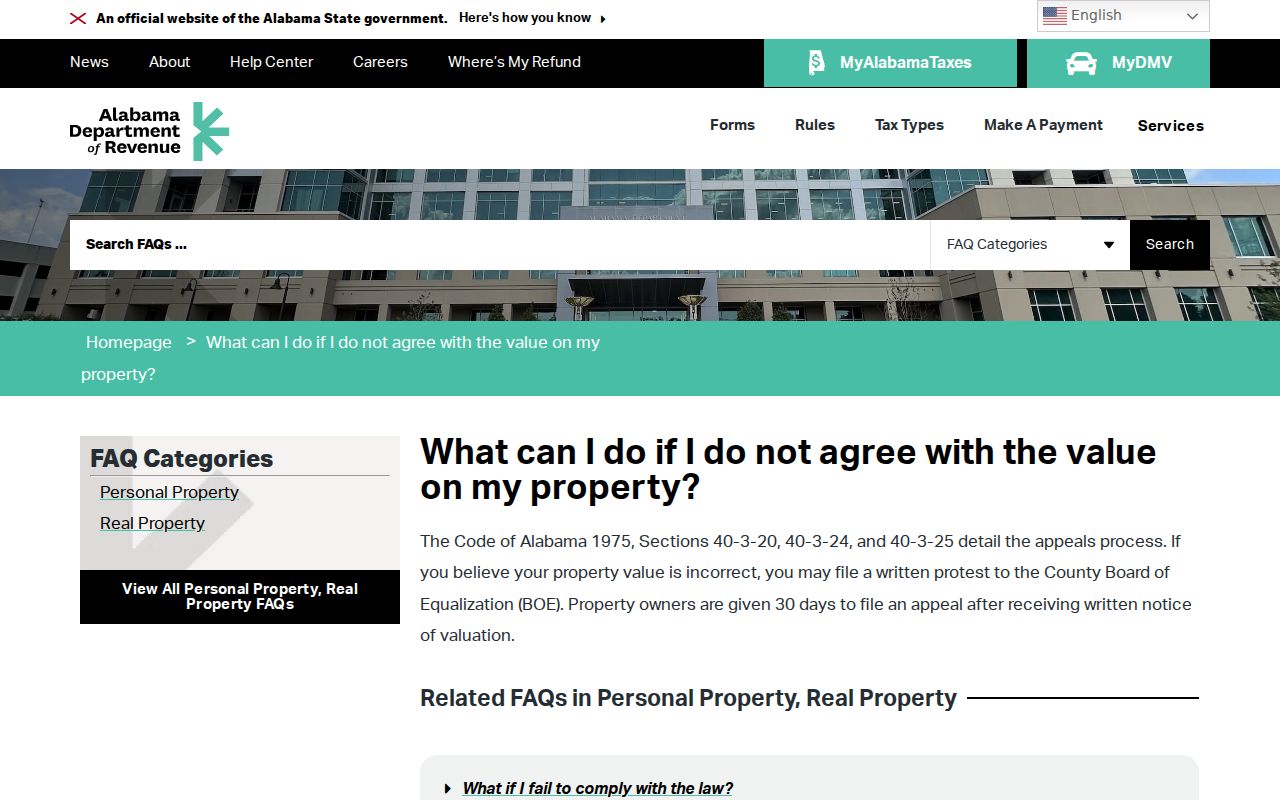
Note: The displayed notice shows why the written valuation date must be saved before contacting the board or appraisal staff.
Correct Chambers Tax Records
The Revenue Commissioner divides the work among four desks. Assessments, at (334) 864-4389, handle classification, returns, and exemptions. Collections, at (334) 864-4396, handle bills and payments. The chief appraiser and mapper, at (334) 864-4379, take value questions. The mapping clerk, at (334) 864-4322, handles parcel-map issues.
When you call about a parcel, have the details ready. Give the parcel or PIN, the account number, the physical address, and the card year. Name the exact field that looks wrong. A duplicated street number, zero acreage, an old mailing address, or a missing sale field should be copied as displayed. Report it after that. If a correction turns on the legal description, bring the deed or the recorded plat.
Unpaid tax can leave traces in more than one office. Revenue keeps the account, the delinquency, and the auction notice. Probate indexes the tax-sale dockets, deeds, corrective deeds, and redemptions. Litigation may land in Circuit Court. Remember that a list row proves no transfer. A recorded tax deed settles few title questions on its own.
Distressed land needs careful paperwork. Keep the legal description and every recording reference. Check the account, the auction result, the redemption status, and any later deed. Also check the current assessment before you lean on a single entry.
Chambers Appraised Value Formula
Alabama's formula is simple. Appraised value times the property-class ratio gives assessed value. One mill equals 0.001, so assessed value times millage yields the tax before any adjustments. Class I utility property carries 30 percent, Class II property 20 percent, Class III qualifying agricultural, forest, owner-occupied residential, manufactured-home land, and historic property 10 percent, and Class IV vehicles 15 percent.
Class is not obvious from a name. Skip guessing from the owner, the use label, or an exemption flag. Read the current Chambers assessment and ask Revenue which class and relief apply. Your bill can move with classification, exemptions, district, millage, or corrected property facts even when the appraised number holds still.
Sale research depends on this distinction. Appraised value is a tax input. Assessed value is its statutory share. A recorded purchase price is a separate fact altogether, and none of the three equals what a buyer would pay today.
Chambers Tax Payment Channels
The Revenue office serves walk-ups in LaFayette and at the Lanett Annex. It also accepts tax mail. County guidance lists cash, check, money order, major card, and the online portal among the payment routes. Vendor charges should be confirmed before paying online. Keep the receipt and verify that the right parcel and year were credited. A courtesy notice is not the account itself. Missing one does not erase the owner's duty under the county guidance.